
Global Textile Market Size & Share 2026-2034: Asia-Pacific Accounts for 48.7% Market Share
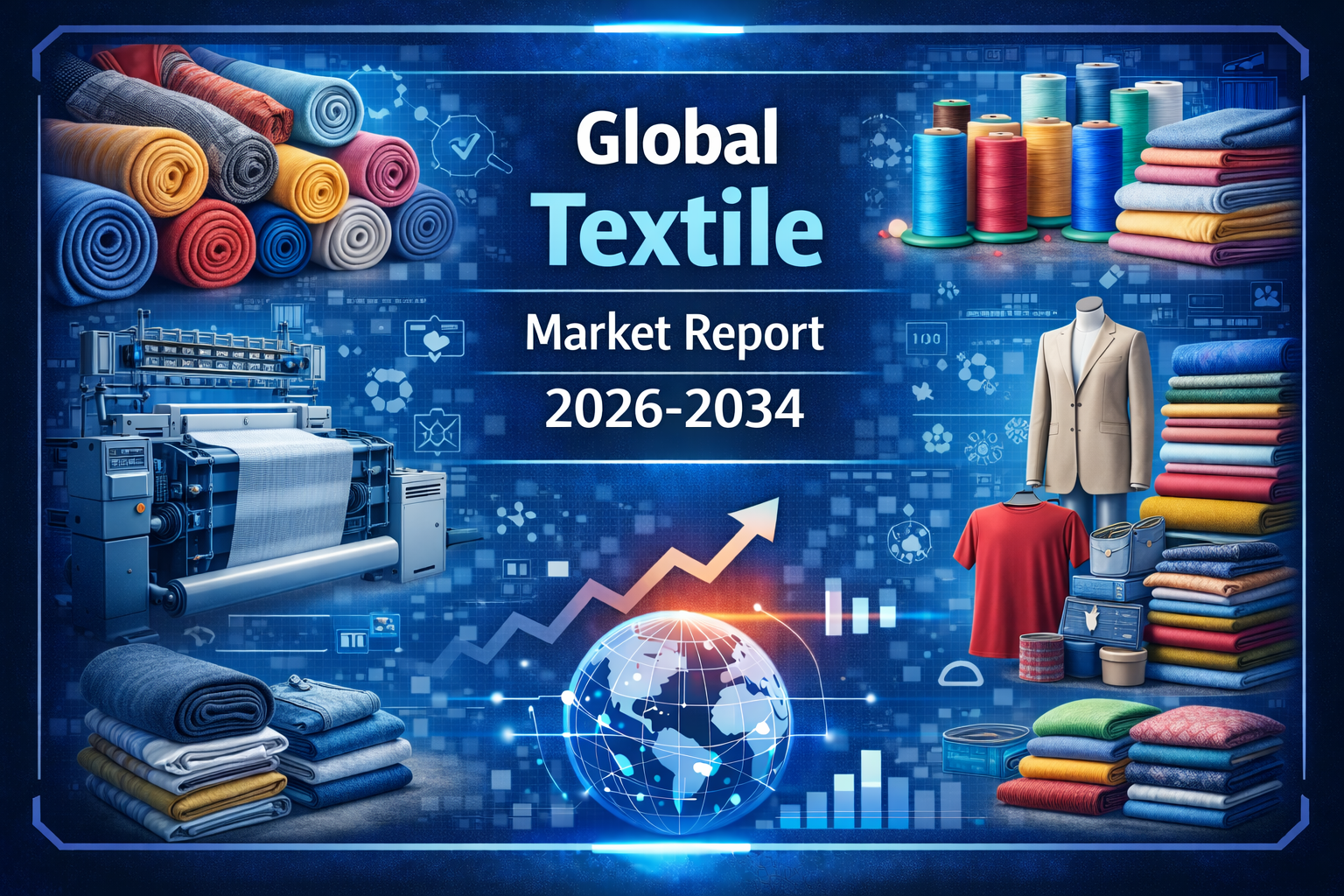
Global Textile Market Share
Driven by the escalating demand for clothing, home furnishings, and industrial applications.
BROOKLYN, BROOKLYN, UNITED STATES, February 25, 2026 /EINPresswire.com/ -- NEW YORK, USA — The global textile industry is navigating a dynamic and expansive growth trajectory. According to a new market intelligence report by IMARC Group, the Global Textile Market — valued at USD 1,104.0 Billion in 2025 — is projected to surpass USD 1,508.1 Billion by 2034, registering a compound annual growth rate (CAGR) of 3.53% during the forecast period 2026–2034.Increase in demand for clothing, home textiles and industrial textiles, rapid urbanization, rise in disposable income of consumers, increase in awareness among consumers regarding eco-friendly and organic textiles, and advancements in technology such as automation, digital printing, and smart textiles for producing textiles with increased efficiency and lower production costs are some of the factors driving the market growth․
Request a Free Sample to Get a Detailed Understanding of the Market: https://www.imarcgroup.com/textile-market/requestsample
Key Market Statistics at a Glance
Market Size (2025) USD 1,104.0 Billion
Projected Size (2034) USD 1,508.1 Billion
Growth Rate CAGR of 3.53% (2026–2034)
Top Region Asia-Pacific — 48.7% market share in 2025
Largest Application Fashion and Clothing — 67.0% share in 2025
Leading Raw Material Cotton — 38.6% share in 2025
U.S. Share in North America 86.60% of North American market
Forecast Period 2026–2034
What Is Driving Textile Market Growth?
The report identifies three core forces reshaping the global textile landscape:
Sustainable fabrics, organic products and functional textile are trending: The trend of sustainable product innovation is very strong․ Consumers are becoming more aware of sustainable and ethical production, which is changing the global textile landscape, as manufacturers embrace more responsible production practices to meet demand․ For example, the Textile Exchange launched a 2025 Recycled Polyester Challenge, encouraging companies to use 45%-100% recycled polyester in 2025․ Comfort, sustainability and style have become the new three pillars driving both consumer purchasing patterns and product development decisions by manufacturers and brands since their importance has increased over time․
Increasing Global Population and Disposable Incomes: As the population of the world grow the demand for all types of textiles will continue․ In 2024 the United Nations likewise projected that the world's population will continue to grow for the next 50 - 60 years, to a peak of around 10․3 Billion in the mid-2080s․ In addition to population growth, increasing per capita income especially in developing countries is likely to lead to major increases in demand for apparel, decorative textiles, bedding and furnishings, and other textiles for use in consumer and industrial products․ There are meaningful challenges to suppliers in building new capacity and developing new products to serve this growing and diverse market․
Manufacturing Innovations: Automation, digital printing and smart fabrics are changing the way textiles are constructed․ Automation reduces cost, improving efficiency - allowing manufacturers to meet spikes in demand by increasing the speed of production․ With its application of design personalization and production diversity, the digital textile printing market was valued at USD 2․86 Billion in 2024 and is anticipated to reach USD 5․49 Billion by 2033 with an annual compound growth rate of 7․13% during 2025-2033 as per the IMARC Group․ In addition, demand is for smart textiles with sensors and electronics to be used in health care, defense, sportswear, industrial and more․
Detailed Segment Analysis
1. By Raw Material: Cotton Dominates at 38.6% Share
The raw material segment spans cotton, chemical fibers, wool, silk, and others. Cotton commands the leading position with 38.6% market share in 2025.
• Cotton — #1 (38.6%): Natural, breathable, and comfortable, cotton is the world’s most preferred textile raw material. Its softness, skin-friendly properties, moisture absorption, and ease of dyeing make it ideal for everyday clothing and home textiles. Cotton’s biodegradability strongly appeals to environmentally conscious brands and consumers. Government agencies worldwide are actively promoting cotton farming, and its well-established global supply chains ensure consistent availability and cost competitiveness.
• Chemical Fibers (Polyester, Nylon, Acrylic) — High Volume: Chemical fibers dominate the high-volume, cost-competitive segment of the market, offering durability, elasticity, and resistance properties that natural fibers cannot replicate. Polyester’s versatility and low cost make it the most produced synthetic fiber globally, widely used in fast fashion, sportswear, and industrial textiles.
• Wool — Premium Natural Segment: Wool maintains strong demand in premium apparel, cold-weather clothing, and home furnishings. Its natural insulation, moisture management, and durability properties position it as a high-value raw material, particularly in European and North American luxury markets.
• Silk — Luxury and Heritage: Silk occupies the luxury end of the textile raw material market, with strong demand in premium fashion, bridal wear, and home décor. Asia-Pacific, particularly China and India, dominates silk production and export globally.
2. By Product: Natural Fibers Lead, Polyesters Drive Volume
The product segment encompasses natural fibers, polyesters, nylon, and others. Natural fibers lead on the basis of consumer preference for comfort, eco-friendliness, and premium positioning.
• Natural Fibers — Market Leaders: Cotton, wool, silk, and linen are preferred for their softness, breathability, and non-irritating properties. Their biodegradability aligns with the accelerating sustainability movement, and many fashion brands are actively promoting natural fiber garments to appeal to eco-conscious buyers. In regions with strong traditional textile industries, natural fibers carry additional cultural and economic significance, reinforcing their market dominance.
• Polyesters — Highest Volume Production: Polyester drives the highest production volumes globally due to its low cost, durability, and adaptability across apparel, home textiles, and industrial uses. Its role in performance sportswear, outdoor clothing, and fast fashion categories ensures sustained high demand, even as sustainability pressures encourage growth in recycled polyester variants.
• Nylon — Technical and Performance Applications: Nylon is the preferred choice for high-performance technical textiles, including activewear, outdoor gear, hosiery, and industrial fabrics. Its strength, abrasion resistance, and elasticity make it indispensable in sectors where performance attributes are paramount.
3. By Application: Fashion and Clothing Leads at 67.0% Share
The application segment covers fashion and clothing, household, technical applications, and others. Fashion and clothing dominates with 67.0% of market share in 2025.
• Fashion and Clothing — #1 (67.0%): The thriving apparel industry drives dominant demand for a wide variety of textiles including natural and synthetic fibers tailored to comfort, durability, and aesthetics. Seasonal changes and fashion cycles accelerate purchase frequency, while the rise of fast fashion intensifies production volumes. Clothing manufacturers are investing heavily in innovative fabrics with moisture-wicking, stretchability, and eco-friendly properties. The rapid expansion of online retail channels is further broadening consumer access to diverse textile products, sustaining this segment’s leadership position.
• Household Textiles — Steady Growth: Household applications including bed linens, curtains, towels, and upholstery are experiencing steady growth driven by urbanization, rising living standards, and growing interest in interior aesthetics. The Middle East’s luxury goods sector — valued at USD 9.6 Billion in Saudi Arabia in 2024 — exemplifies premium household textile demand in high-income markets.
• Technical Textiles — Fastest Innovation: Technical textiles used in healthcare, defense, automotive, aerospace, construction, and sports are among the fastest-innovating subcategories. Smart textiles with sensors, antimicrobial properties, flame resistance, UV protection, and temperature-regulation are gaining significant momentum. The European Commission’s Textiles of the Future European Partnership, launching in 2025 with a minimum of €60 Million in public and private R&D investment during 2025–27, will further accelerate technical textile innovation.
Connect for Detailed Segmentation Analysis — Speak to an Analyst: https://www.imarcgroup.com/request?type=report&id=3728&flag=C
Regional Spotlight: Where Is Growth Concentrated?
Asia-Pacific — Market Leader at 48.7%
Asia-Pacific will remain the largest market for textile, accounting for 48․7% of the total market share by 2025․ It has a strong textile making base, cheap labor, and abundant raw material․ China and India account for the largest share of textile production and export worldwide․ India's textile and apparel exports (April-October FY 2023-24 vs․ April-October FY 2024-25) increased from USD 20,007 Million to USD 21,358 Million (7%)․ In June 2023, the Government of India sanctioned USD 7․4 Million (INR 60 Crore) for research and development projects in the textile sector․ From April 2000 - September 2024, the total FDI inflow in the Indian textile industry stood at USD 4․56 Billion․ A rising domestic consumer class, rapid urbanization, and e-commerce adoption have accelerated the region's textile production and consumption․
North America — Technology and Sustainability-Led Growth
North America, with the United States accounting for 86․60% of regional market share, is the second largest textile market․ The apparel, household, and industrial sectors are meaningful buyers and demand high quality fabrics from the US textiles market․ In 2024, e-commerce in the United States reached 22․7% of total sales, which was an all-time high․ The United States exported USD 24․7 Billion worth of textiles in 2024, according to the Observatory of Economic Complexity․ Government support for reshoring of textile manufacturing, and expanded investment in smart textiles, sustainable fibers and biomaterials, and advanced functional fabrics for the healthcare, defense and sports markets, positions the United States at the leading edge of the advanced textiles industry․
Europe — Circular Economy and Advanced Manufacturing
The textiles market in Europe is expected to grow by incorporating circular economy and recent advancements in material sciences and technology․ The rising demand for biodegradable and regenerative textiles is driven by supported government regulations and customer awareness in the EU․ Digital fabric printing and 3D knitting enable product customization and small and rapid production․ The European Commission Textiles of the Future European Partnership, which starts in 2025, will provide at least €60 Million between 2025 and 2027, towards fundamental research and innovation activities․ Alongside these, demand for technical textiles with flame-resistant or high-performance properties is being driven by Europe's growing automotive and aerospace industries․
Latin America — Emerging Regional Integration
Latin America's textile and apparel market benefits from regional trade integration and an increasing demand for clothing and home textiles, fueled by changing lifestyles․ For instance, in 2024, Brazil imported USD 6․65 Billion in textiles according to the Observatory of Economic Complexity, signifying the region's potential market for textile imports․ Textile clusters are growing to create leaner supply chains and digital design software allows regional brands to produce regionally and/or globally relevant products․
Middle East and Africa — Luxury Growth and Climate-Responsive Textiles
The Middle East and Africa are experiencing an increase in market growth due to urbanization, a growing demand for luxury goods, and changing consumer preferences․ By 2024, the Saudi Arabian market for luxury goods will be USD 9․6 Billion, creating opportunities for premium market growth in textiles․ Textiles which are climate-based including moisture-wicking, UV protection and breathability are especially popular in this region․ The cultural context also plays a role in the design and variety of materials of the textile products in the region․
Key Market Trends Shaping the Future
• Sustainable and Recycled Textile Innovation: The industry is accelerating its transition toward recycled fibers, organic materials, and bio-based alternatives. The Textile Exchange’s 2025 Recycled Polyester Challenge and similar global sustainability initiatives are pushing brands and manufacturers to dramatically reduce virgin synthetic fiber dependence, creating a major structural shift in raw material sourcing.
• Smart Textiles and Wearable Technology: Textiles integrated with sensors, electronics, and responsive materials are revolutionizing applications in healthcare monitoring, military performance gear, sports analytics, and consumer wellness. This high-value segment is attracting significant R&D investment from both traditional textile manufacturers and technology companies.
• Digital Printing and Mass Customization: Digital textile printing — projected to grow from USD 2.86 Billion in 2024 to USD 5.49 Billion by 2033 at a 7.13% CAGR — is enabling brands to offer greater design personalization, faster product development cycles, and more efficient small-batch production, directly responding to consumer demand for unique and personalized textile products.
• Fast Fashion and E-Commerce Synergy: The convergence of fast fashion business models and expanding e-commerce penetration is accelerating textile production cycles and broadening global market reach. U.S. e-commerce penetration reaching 22.7% in 2024 and India’s rapid digital retail expansion are emblematic of a global trend reshaping how textiles are designed, marketed, and sold.
• Reshoring and Supply Chain Resilience: Global supply chain disruptions have catalyzed a significant reshoring and nearshoring movement in key textile markets. U.S. government incentives for domestic textile production, Europe’s supply chain transparency requirements, and India’s production-linked incentive (PLI) scheme are collectively reinforcing regional manufacturing capabilities and reducing dependence on single-source supply chains.
Latest Industry Developments
• May 2025: Defi Design introduced its Spring/Summer 2025 Capsule Collection, showcasing gender-neutral streetwear and a versatile denim Skirt X, highlighting striking uniqueness, high-quality materials, and creative silhouettes.
• March 2025: Decathlon unveiled a new casual apparel collection following a successful 2024 test run, expanding into the lifestyle market with unisex, men’s, and women’s essentials including leggings and sweatshirts with retro and outdoor influences.
• February 2025: Square Fruit debuted in Mumbai with two gender-neutral collections — Genesis and Valentine’s Day — offering 19 SKUs fusing Indian craftsmanship with unisex fashion, employing gauze, crushed cotton, and silver Zari fabrics.
• February 2025: GU and Undercover revealed the ‘Ug’ apparel line, fusing GU’s essentials with Jun Takahashi’s unisex minimalist style, launching the inaugural ‘Silent/Noise’ collection with sweatshirts, utility trousers, and innovative fabric two-piece outfits.
Buy Full Report: https://www.imarcgroup.com/checkout?id=3728&method=3451
About the Report
IMARC Group's report, titled 'Textile Market Size, Share, Trends and Forecast by Raw Material, Product, Application and Region, 2026-2034', provides an in-depth analysis of the global textile market, including historical market data from 2020 to 2025, market segmentation, competition landscape, and outlook․ The report has segmented the market based on five raw materials (cotton, chemical, wool, silk and others), four products (natural fibers, polyesters, nylon and others) and four applications (household, technical, fashion and clothing and others), across Asia-Pacific, Europe, North America, Latin America and the Middle East and Africa․ The report includes competitive benchmarking of 11 players in the industry, including Aditya Birla Ltd․, Arvind Limited, DuPont de Nemours Inc․, Toray Industries Inc, among others, with 10% free customization, and 10 to 12 weeks of post-sales analyst support․
About IMARC Group
IMARC Group is a leading global market research company providing data-driven insights and expert consulting services to businesses seeking to achieve their strategic objectives. With a multi-disciplinary team of industry experts, IMARC delivers thorough, reliable market intelligence across sectors including Retail, Consumer Goods, Chemicals and Materials, Healthcare, Technology, and more.
Media & Sales Contact
IMARC Group
Email: sales@imarcgroup.com
United States: +1-201-971-6302
India: +91-120-433-0800
United Kingdom: +44-753-714-6104
Elena Anderson
IMARC Services Private Limited
+ +1 201-971-6302
email us here
Legal Disclaimer:
EIN Presswire provides this news content "as is" without warranty of any kind. We do not accept any responsibility or liability for the accuracy, content, images, videos, licenses, completeness, legality, or reliability of the information contained in this article. If you have any complaints or copyright issues related to this article, kindly contact the author above.
