

Pneumatic Nebulizers Market Size Expands at 5.2% CAGR Through 2033 | Persistence Market Research
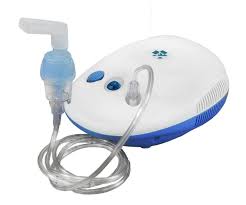
pneumatic nebulizers market
Global pneumatic nebulizers market driven by rising respiratory diseases, homecare demand, and innovations in aerosol drug delivery technology.
LONDON, UNITED KINGDOM, March 4, 2026 /EINPresswire.com/ -- The global pneumatic nebulizers market is projected to grow from US$ 910.6 million in 2026 to US$ 1,495.8 million by 2033, registering a CAGR of 5.2% during the forecast period. Historical growth between 2020 and 2025 stood at 5.2%, reflecting stable and sustained demand for aerosol-based respiratory therapies worldwide. Increasing prevalence of chronic respiratory conditions such as asthma, chronic obstructive pulmonary disease (COPD), cystic fibrosis, and bronchitis continues to drive demand for reliable drug delivery systems. Rising air pollution levels, growing smoking populations, occupational exposure to airborne irritants, and aging demographics further contribute to the expanding patient pool requiring long-term inhalation therapy. Pneumatic nebulizers remain widely used across hospitals, clinics, and homecare settings due to their ability to deliver a broad range of medications efficiently, including bronchodilators, corticosteroids, and antibiotics. Continuous innovation in compressor efficiency, particle size optimization, reduced noise levels, and patient-friendly designs is strengthening treatment adherence and supporting market expansion.
Download Your Free Sample & Explore Key Insights: https://www.persistencemarketresearch.com/samples/33240
Market Dynamics
Driver: Rising Burden of Chronic Respiratory Diseases and Environmental Risk Factors
The growing global incidence of asthma and COPD is a primary growth driver. According to the American Lung Association, asthma prevalence in the United States reached 24.7 million individuals in 2023, highlighting the substantial patient base dependent on inhalation therapies. Chronic respiratory diseases require repeated and long-term drug administration, making pneumatic nebulizers essential in both acute and maintenance therapy. Increasing geriatric populations and improved survival rates among respiratory patients are reinforcing long-term device utilization. Additionally, worsening environmental conditions, including urban air pollution, industrial emissions, and vehicular pollutants, are elevating respiratory disease rates, particularly in emerging economies. Smoking and occupational exposure to dust and chemicals further intensify disease burden, sustaining demand for nebulized drug delivery systems globally.
Restraint: Device Limitations Impacting Patient Compliance and Portability
Despite their effectiveness, pneumatic nebulizers face limitations that may restrict adoption in certain settings. Longer treatment times compared to alternative inhalers can reduce patient adherence, particularly in outpatient and homecare environments. Traditional compressor-based systems are often bulky, less portable, and generate operational noise, which may inconvenience pediatric and elderly patients. Dependence on a continuous power supply also limits mobility and travel use. As patient preference increasingly shifts toward compact and silent respiratory devices, these limitations pose competitive challenges from mesh and ultrasonic technologies.
Opportunity: Expansion of Homecare Respiratory Management and Emerging Market Demand
The expansion of home healthcare services presents significant opportunities. Healthcare systems worldwide are transitioning toward decentralized care models, encouraging long-term respiratory management at home. Pneumatic nebulizers are preferred for pediatric, geriatric, and severely ill patients who require consistent drug delivery without complex inhalation techniques. Emerging economies in Asia and Latin America are witnessing improved healthcare access, broader insurance coverage, and growing respiratory care investments. Manufacturers are responding with compact, affordable, and low-noise models tailored for home-based therapy, strengthening long-term growth potential.
Get Custom Insights Designed for Your Business: https://www.persistencemarketresearch.com/request-customization/33240
Category-wise Analysis
By Product Insights
Breath-actuated pneumatic nebulizers are expected to dominate the market in 2026, accounting for 42.6% of revenue. These devices synchronize aerosol delivery with patient inhalation, improving lung deposition and minimizing medication wastage. Their suitability for both adult and pediatric patients supports widespread adoption. Technological advancements in compressor systems and particle size control further enhance efficiency and compatibility with multiple medications. The vented segment is projected to grow at a faster pace, particularly for long-term and home-based respiratory therapy, where continuous airflow and ease of use are critical.
By End-user Insights
Hospitals are projected to account for 58.2% of market revenue in 2026, driven by high treatment volumes for severe asthma attacks, COPD exacerbations, and post-operative respiratory care. Access to trained respiratory therapists, intensive care infrastructure, and centralized procurement systems supports hospital dominance. However, homecare settings are emerging as the fastest-growing end-user segment, fueled by increasing demand for post-discharge management, chronic disease monitoring, and outpatient therapy solutions.
Regional Insights
North America is expected to lead the global market with a 47.1% share in 2026, supported by advanced healthcare infrastructure, favorable reimbursement policies, and high diagnosis rates of respiratory disorders. Early adoption of portable and low-noise compressor systems further strengthens regional demand. Europe demonstrates steady growth due to universal healthcare coverage, aging populations, and structured respiratory treatment pathways across major economies such as Germany, the United Kingdom, France, and Italy. Asia Pacific is projected to register the highest CAGR of approximately 7.0% between 2026 and 2033, driven by rising air pollution, expanding healthcare infrastructure, and a large untreated patient population across China, India, Japan, South Korea, and Southeast Asia. Government initiatives promoting chronic disease management and improved device affordability are accelerating regional expansion.
Competitive Landscape
The market remains highly competitive, with key players including Koninklijke Philips N.V., Omron Corporation, Medtronic, General Electric, Medline Industries Inc., and BD (Becton, Dickinson & Company). These companies focus on compressor innovation, aerosol efficiency, device durability, and expansion into home healthcare markets. Strategic initiatives include product launches, regulatory approvals, partnerships with hospitals and durable medical equipment providers, and geographic expansion into emerging markets. Continuous R&D investments and portfolio diversification are expected to sustain competitive intensity and long-term market growth.
Checkout Now & Download Complete Market Report: https://www.persistencemarketresearch.com/checkout/33240
Market Segmentation
By Product
Breath-Actuated
Vented
By End-user
Hospitals
Sleep Centers and Clinics
Home Care Settings
By Region
North America
Europe
East Asia
South Asia and Oceania
Latin America
Middle East and Africa
Read Related Reports:
E-Prescribing Market: The global e-prescribing market is set to grow from US$6.0 Bn in 2026 to US$26.2 Bn by 2033, expanding at a strong 23.4% CAGR during forecast period.
Gynaecological Cancer Drugs Market: Global gynaecological cancer drugs market valued at US$15.8 billion in 2026, projected to reach US$26.0 billion by 2033, growing at a 7.4% CAGR.
Persistence Market Research
Persistence Market Research Pvt Ltd
+1 646-878-6329
email us here
Visit us on social media:
LinkedIn
Instagram
Facebook
YouTube
X
Legal Disclaimer:
EIN Presswire provides this news content "as is" without warranty of any kind. We do not accept any responsibility or liability for the accuracy, content, images, videos, licenses, completeness, legality, or reliability of the information contained in this article. If you have any complaints or copyright issues related to this article, kindly contact the author above.
